C’mon, October!

As if the muggy 90 degree weather wasn’t enough to make me wish for fall, look at the books coming out in October!

Untitled-3

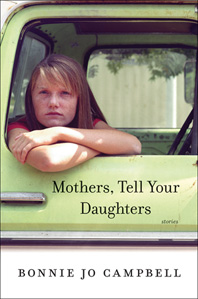
Bonnie Jo Campbell is one of my favorite writers, and she hasn’t had a book out since her wonderful 2011 novel Once Upon a River. Her new one is a collection of short stories, and given how much her previous collections rocked my socks, I am incredibly excited about this one.


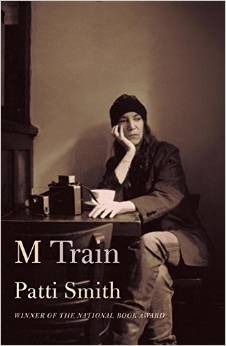
Patti Smith is one of my heroes, and I loved her previous memoir Just mtrainKids, which focused on her early years as an artist in NYC and her friendship with Robert Mapplethorpe. M Train is a follow up to Just Kids which will reportedly focus on other aspects of her life, including her marriage to Fred “Sonic” Smith.

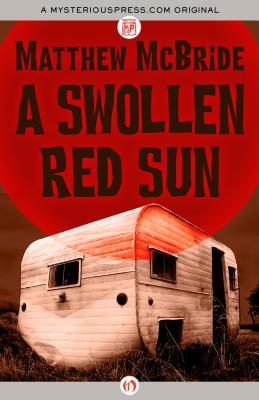
A Swollen Red Sun by Matthew McBride

red sunThis book seemed like it should be right up my alley: Rural noir, set in my home state of Missouri, written by a Missourian, featuring various down-and-out characters, and it even got positive reviews in both Book List and Publisher’s Weekly. While the book kept me reading with a plot that was reasonably compelling, the cartoonish characters and black and white morality left a sour taste in my mouth.

The story centers on Dale Banks, a Deputy Sheriff in Gasconade County, Missouri (where the author himself resides). Banks and his fellow law enforcement officers struggle to keep on top of the crime that poverty and meth has brought to their once sleepy area. One day, while looking to bust a local dealer, Banks discovers a stash of drug money. Thinking about his family and feeling fed up with the local hoodlums causing so many problems, Banks impulsively takes the money.

Of course this theft opens up a whole raft of problems for Banks, and exposes the various links between the local drug trade and corruption in local politics and law enforcement, which definitely kept me reading. The characters, though, left much to be desired. Both the good guys and the bad guys lacked complexity, with the bad guys seeming almost ghoulish cartoons of familiar stereotypes of “white trash”. The female characters, while all tertiary to the story, are particularly delineated: we have on one hand saintly, pretty, loyal wives; on the other, morbidly obese, sex-obsessed (and sometimes incestuous), scheming, cheating sluts.

What I like about the best rural noir (think Daniel Woodrell here, although others can be great without being quite as literary) is they present complicated characters who may be struggling and making poor choices, but whose motivations make sense to the reader and are easy to empathize with. A Swollen Red Sun totally lacked that kind of complexity and character development, which made the sexism and gruesome violence even harder to take.

Coming soon! Upcoming titles I can’t wait to read.

August: 

Bad Feminist: Essays by Roxane Gay  bad feminist - Copy

I fell in love with this author after reading her new novel, Untamed State, and now I want to read anything she ever writes. I am super looking forward to this one, which comes out next week.


September:

paying guestsThe Paying Guests by Sarah Waters

I love Waters’ signature style of suspenseful historical fiction, often focusing on lesbian relationships. Tipping the Velvet is one of my favorites, and this one sounds like it could be just as good. It takes place in 1920s London and centers on a widow and her spinster daughter who are forced to take a young couple into their home as lodgers.


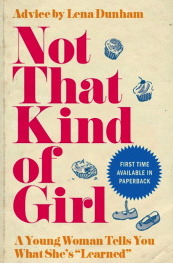
Not That Kind of Girl: a Young Woman Tells You What She’s Learned by Lena Dunham 

not that kind of girl

I find Lena Dunham to be quite funny and smart in interviews, and I am a big fan of her show Girls, so I am really curious to see how this book of essays will turn out.


how to build a girl

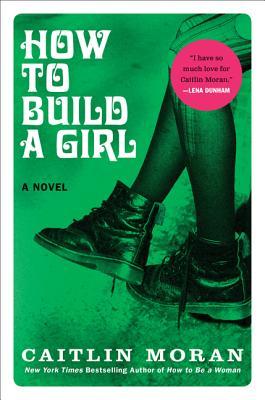
How to Build a Girl by Caitlin Moran

This upcoming coming of age novel had me at the publisher blurb: “Imagine The Bell Jar written by Rizzo from Grease.”  It takes place in London in the 1990s, and is written by a well-known UK critic and feminist author who’s non-fiction title How to be a Woman made a big splash when it came out in 2012. Also, look at that great cover! I love the 90s-fied take on the classic cover of The Bell Jar.


Smoke Gets in Your Eyes: and Other Lessons from the Crematory by Caitlin Doughty

smoke gets in your eyes

I’ve heard a lot of hype about this one, and it sounds pretty fascinating. It’s a memoir by a young woman who took a job at a crematory in her 20s and found her calling as a mortician.


October:

yes pleaseYes Please by Amy Poehler

Amy Poehler, people! Need I say more? No, I do not.

Periodicals.

I’ve been thinking about magazines and newspapers lately, since I am always tempted to add new subscriptions. These are the ones I read regularly, in paper form.

Weekly: Sunday edition of The New York Times, The Economist (only the letters, book reviews, and obituary, though, since they are on the opposite side of the class war), and The New Yorker (recent addition).
Monthly/Quarterly: Oxford American, The Believer, Bark Magazine, and Tin House. And I flip through Make Magazine.
For work: Library Journal, Locus, Booklist, Publisher’s Weekly, and Book Page.

Also, I recently resubscribed to Ms. Magazine, and I used to always read Bitch, but my subscription lapsed. 

The Hundred-Year House


While I did not care much for Rebecca Makkai’s first novel, The Borrower, I was convinced to give her new one a try because of several great Jacket.aspxreviews and an intriguing premise. The novel focuses on the story of Laurelfield, an old family estate owned by the Devohr’s, an old money family with quite a few skeletons in their closet.

The story opens in 1999, with Zee and her husband Doug moving into the carriage house while her mother, Grace Devohr, and stepfather Bruce occupy the main house. Zee is a Marxist literary scholar employed by a local college, and her husband Doug is writing (or trying to write) a book about the mysterious poet Edwin Parfitt.

The house itself has a history at least as interesting as the family that owns it. It has long been rumored to be haunting, having been the site of the tragic suicide of Violet Devohr decades before. Most importantly, it served as the Laurelfield Arts Colony from the 1920s through the 1950s and hosted scores of eccentric artists of varying degrees of importance. Edwin Parfitt was once in residence there, and Doug begins a clandestine search for information and artifacts about his stay, focusing on the long abandoned attic of the main house. His search leads to the discovery of some long-buried family secrets involving Grace and the history of the Devohr family.

After setting up several mysteries, the novel moves on to the second section, which takes place in 1955, right after the time of the Arts Cology. It focuses on an ancestor of Zee Devohr who has just moved into Laurelfield with her new husband, a man who drinks and abuses her, and she feels very isolated at Laurelfield. This is the shortest section of the book, which exposes even more of the tangled history of the Devohr’s. The final section of the book takes the reader back to the goings on at the house during 1929, during the time when Edwin Parfitt was in residence of the Laurelfield Arts Colony.

I enjoyed the structure of the book and the move backward through time, and the mysteries kept me reading. Unfortunately, there were quite a few things that did not work for me. Character development was lacking, and it was hard to get invested in the characters. I felt that too much time was spent on the 1999 section, which was the least interesting part for me and had a complete dearth of sympathetic characters. The parts involving the Laurelfield Arts Colony were my favorite, but it was only a small portion of the narrative.

This is one of those novels that I enjoyed while I was reading it, but once it was over the flaws were pretty apparent. The characters and their plot lines lacked the depth to make this a satisfying story.


New reading (and writing) resolution


I’ve been reading quite a bit lately (my Goodreads 2014 Challenge even says I am 3 books ahead of schedule), and I’ve read several books that I thought were really great. I’m definitely not in a reading rut, but for several months I’ve been having a really hard time writing anything about the books I have read. This is a problem because I really want to take advantage of the opportunities I have to share good books with other readers and to promote the great collection at my library. So, my new resolution is to write something, even if it is very short, about everything I read. I’m going to use my (long languishing) blog instead of Goodreads.com because I am reluctant to provide Amazon with free content. Plus, I don’t really care if no one really sees it, since it is more an exercise for myself than anything else.

I’m going to start with the books I’ve ready very recently, so hopefully there will be several posts up about those soon.


Missouri Noir

I grew up in southern Missouri, a part of the country notorious in recent years for the epidemic of methamphetamine production and addiction the region has faced. Missouri, though, also contains a lot of natural beauty and a rich history. Daniel Woodrell, a novelist born and raised in the Missouri Ozarks, sets much of his work in this region and eloquently captures these contradictions. He obviously loves the Ozarks, and even as his stories focus on the dark underbelly of rural poverty and crime, they evoke a vivid sense of place and culture. He uses the term “country noir” to describe his work, which fits it perfectly. His characters all inhabit a world set apart from the mainstream culture and often apart from the mainstream economy. Even though they live in a world where poverty, desperation, and violence are common, his characters are so well-realized that they draw you in despite their often extreme circumstances.
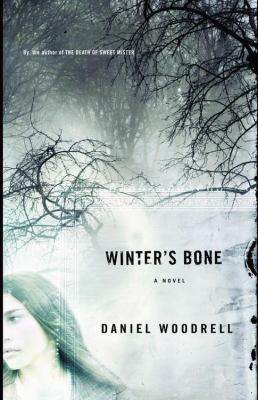
 ImageThe film version of “Winter’s Bone” was my first exposure to Daniel Woodrell, and I sought out the book soon after. It centers on Ree Dolly, a teenager growing up in the Missouri backwoods. Her mother is suffering from mental illness and her father is in and out of jail for cooking meth, so it is up to her to care for her two young siblings. When her father puts their land and house up for bail and disappears, Ree sets out to find him in order to save their home and the wooded property that has been in her family for generations. Her search takes her on a dangerous hunt through a hostile web of extended family and drug connections.  It is one of the few cases where I think a movie adaptation lives up to the novel, as both are equally compelling. The movie streamlines the story into a tense thriller, while the novel takes time to meander and develop the relationships between the characters. Ree is a fierce and sympathetic heroine, determined to find out what happened to her father despite the warnings and violence she encounters.

 “Give Us a Kiss”, one of Woodrell’s earlier novels, centers on a writer not unlike Woodrell himself. Feeling Imagedown on his luck after experiencing downturns in his marriage and his writing career, Doyle Redmond heads home to the Ozarks in his wife’s stolen Volvo to track down his law-evading older brother. He finds him living deep in the woods with plans for a drug operation that promises a big score, and Doyle, being in need of some cash, decides to help out. There’s a hitch in the plan, however, when the Dolly family, enemies of the Redmond’s since Civil War days, start making trouble. Doyle is drawn into a fierce battle of family loyalties and long-held grudges, sinking deeply into a violent conflict he thought he had avoided. While not short on tension or suspense, Doyle’s story is told in an appealing and often quite humorous first-person narrative that makes for a quick and entertaining read.
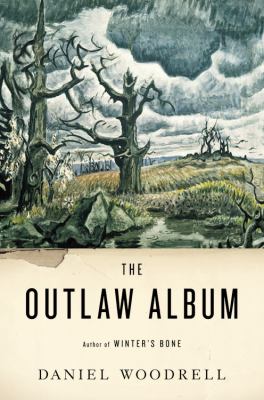
ImageWoodrell’s most recent book is “The Outlaw Album”, a collection of twelve short stories published in 2011 that continues his literary exploration of people living on the fringes of society.  The characters are all living hardscrabble lives in the Ozarks but each face their own unique source of inner turmoil. They range from a man who has murdered his neighbor for killing his wife’s beloved pet, a Vietnam veteran coming to terms with killing another veteran in self-defense, to a grieving father of a missing daughter who can’t shake his suspicion that one of his fellow townspeople must be responsible for her disappearance. Whatever their specific situations, the characters are portrayed as having an immense capacity for both violence and tenderness.  This duality makes the stories very poignant and sometimes darkly humorous as well.

These works by Woodrell paint a striking picture of rural Missouri and of self-reliant people facing the challenges of high poverty rates, social isolation, and limited opportunity. While he does focus on one grim slice of Missouri life, his characters ring true. Their manner of speaking, their hardships, and their culture remind me of people I have known in my own life. Despite the dark themes, the vulnerability of the characters and Woodrell’s unique poetic style render his stories compelling, entertaining, and often very moving.
Memoirs, from heartbreaking to hilarious.

A memoir is a form of autobiography, one that is often less formal and more of a remembrance (as the name suggests), although the terms are often used interchangeably. Memoirs are one of my favorite types of non-fiction because the variety within the genre reflects the great diversity of human experiences. While many memoirs are written by celebrities or powerful figures, my favorites are stories of everyday people. One common focus of this type of memoir is family and upbringing. Everyone is shaped in some way, for better or worse, by their family of origin and this is evident when people tell their life stories. I recently read three new memoirs that focus on the authors’ formative family lives, each with their own unique perspective.

ImageJeanette Winterson’s memoir “Why Be Happy When You Could be Normal” takes the reader along on her heart-wrenching journey to become the award-winning novelist she is today. The driving force behind her story is her conflict with her mother. Adopted as a baby, Jeanette was raised by the devoutly Pentecostal Mrs.Winterson, a stern and powerful figure who relished self-denial and doled out frequent punishment. As a small child Jeanette fit well into Mrs. Winterson’s religious plan, but as she grew their relationship became contentious. Jeanette loved to read and wanted to become a writer, but Mrs. Winterson forbade all books except for religious texts. The real break in their relationship came, though, when Mrs. Winterson discovered her daughter was dating a woman, which prompted the question posed in the title. As a result, Jeanette leaves home as a teenager in order to realize her dream of education and happiness, but it is never an easy path and she never fully escapes the shadow of her relationship with her mother.

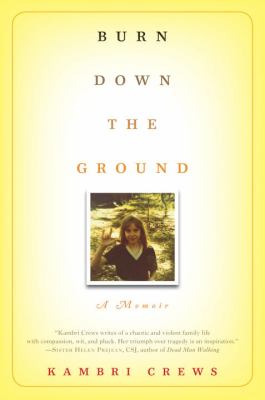
Kambri Crews focuses on her experience growing up in a family that consisted of two deaf parents and two hearingImage  children in her new memoir “Burn Down the Ground”. Kambri straddled both the hearing and deaf communities, often helping her parents navigate the hearing world. Her parents were part of a close-knit Deaf community, and they were always the life of the party. Despite their fun-loving appearance, her parents had a volatile relationship and her father was fighting his own demons. When Kambri was seven, her family moved to remote rural Texas to build a new life in the woods, but problems persist. Kambri idolizes her handsome and charming father, and does not realize the extent of the problems facing her family until much later when she comes face to face with his violent behavior. Kambri struggles to reconcile her childhood memories of him with the legacy he leaves her family.

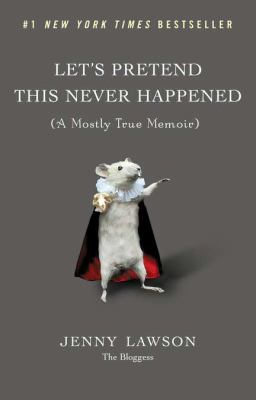
ImageOn a much lighter note, “Let’s Pretend this Never Happened: a Mostly True Memoir” by Jenny Lawson looks back at her childhood through a humorous lens. Growing up poor in rural Texas with an eccentric taxidermist for a father left Jenny with many experiences that, while alternately mortifying and terrifying at the time, are laugh out loud funny from a distance. While Jenny just wanted to fit in, things like angry turkeys following her to school, dead animal hand puppets, and shoes made from bread sacks inevitably set her apart. Eventually she realizes that embracing the absurdity is the only logical choice, but she yearns for a more urban life, preferably one that involves fewer animal carcasses. As an adult, however, living in an urban area with her husband and small daughter, she decides she misses it and wants to move back to raise her daughter near her parents. This return leads to a new batch of adventures, told in Lawson’s relatable and hilarious style.

While these memoirs all focus on the ways that families shape our character, they are very different reading experiences. Memoirs are great because whatever your reading interests are, there is probably one out there that will appeal to you. Just ask a librarian if you need suggestions!

To the river!

Rivers have long been a recurring theme in American literature. Given that rivers have played such a large role in the development of the United States, it’s not surprising that they occupy space in our literary imagination. Rivers meant freedom and transportation, but could also be treacherous to those who lived near them and traveled on them. Mark Twain is perhaps the most famous American author who has written about life on a river, but this theme continues in more modern literature as well. Both “Once Upon a River” by Bonnie Jo Campbell and “Edge of Dark Water” by Joe R. Lansdale are recent novels that explore the possibilities and danger of the river, with heroines who harken back to the adventurous spirit of Huck Finn.

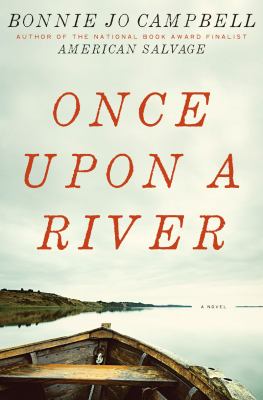
ImageIn “Once Upon a River”, sixteen-year-old Margo Crane has grown up along the Stark River in rural Michigan. She lives a rather isolated life with her father, not far from her extended family. When her father is killed and family turmoil breaks out, Margo takes to the river in the rowboat her grandfather left her. Her plan is to track down her mother, who abandoned the family years before. The river is where Margo feels safe and at home, but she is young and vulnerable and the river, and the people encountered on it, can be very dangerous. Thankfully she has a deep knowledge of the river and some other key strengths, namely her shooting skills, to draw upon. Despite the fact that she is a teenager in the 1970s, her hero is Annie Oakley and Margo is teaching herself to be a sharpshooter. Her journey through the backwoods of Michigan takes her through the paths of many eccentric characters living outside the mainstream, people living off the grid either by choice or because of poverty and circumstance. While in many ways an epic adventure, Once Upon a River is also a poignant character study of a strange and willful young woman seeking a way to live the kind of life she wants outside the trappings of society.

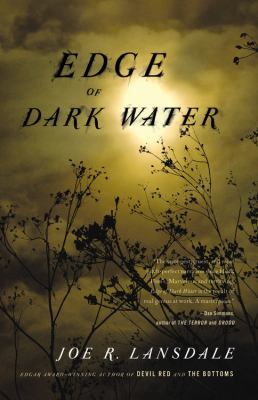
“Edge of Dark Water” has another young woman taking to the river to escape a bad situation. It all startsImage the day Sue Ellen finds the body of her friend May Lynn in the river near her house. May Lynn had been murdered and her body left in the river, weighed down by an old sewing machine. May Lynn had always dreamed of leaving her river shack for the bright lights of Hollywood, and Sue Ellen and her friends Terry and Jinx decide to take her there. There’s nothing for them where they are anyway, as Sue Ellen has to dodge her drunken father on a daily basis, Terry is an outcast in town for being considered a “sissy boy”, and Jinx chafes at the harsh racism of 1930s Texas. Soon they are on a wild ride down the river on an old raft with May Lynn’s ashes in a jar, some stolen money, and a few extra passengers. In pursuit of them (and the money) are the corrupt local lawman, Sue Ellen’s father, and a crazed killer known as Skunk that until recently Sue Ellen thought was just a story. On top of their pursuers, they have the river itself to contend with, with its hidden snakes, currents, and whirlpools. Like Margo, the group encounters many strange people along the way, only some of whom can be trusted to help. Edge of Dark Water is a dark and atmospheric journey, bringing to mind not just the work of Mark Twain but also the modern horror style of Stephen King.

Both Margo and Sue Ellen, like Huck and many others before them, see the river as the natural escape route from difficult lives, a powerful avenue leading to new possibilities. The river is a challenging force of nature, though, demanding more from them than they bargained for and ultimately helping them forge their own paths into adulthood.